

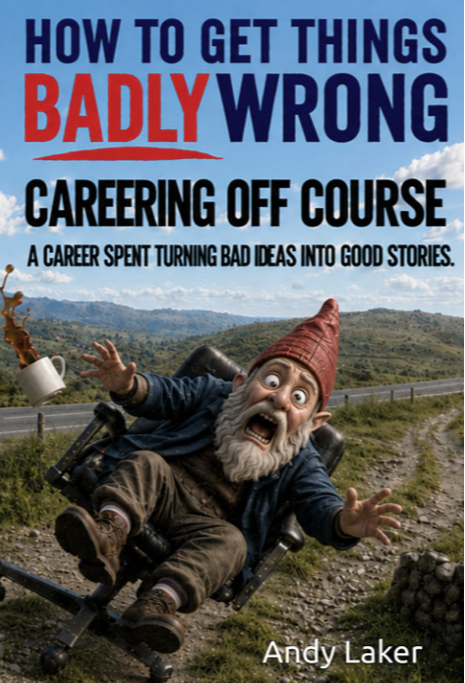
A brutally honest account of a working life spent confusing motion with meaning.
Careering Off Course
Paperback Available Now
What it’s about
Careering Off Course is a darkly funny, brutally honest account of a working life — and side hustles — spent mistaking activity for progress.
From dead-end jobs and corporate misfires to ill-judged ventures and half-formed ideas, it charts one man’s talent for choosing the wrong path with absolute confidence.
Alongside offices, factories and call centres sit failed start-ups, passive income schemes that refused to be passive, and business decisions driven more by optimism, impatience, and pub-level logic than planning.
Effort was rarely the problem. Judgement usually was.
Rather than a story of bold success or tidy redemption, it explores how careers and businesses quietly unravel: through overconfidence, avoidance, poor judgement, and the comforting belief that wanting something badly is the same as knowing how to do it.
It’s about trying to escape employment without fully committing to entrepreneurship — and failing at both.
Part cautionary tale, part confession, this isn’t a guide to success. It’s a record of how to get things badly wrong — and why recognising that might finally count as progress.
You’ve had a “brilliant” business idea at 11:47pm.
You’ve confused being busy with being effective.
You’ve stayed in a job too long because it felt safer.
You’ve blamed timing, luck, or “the market.”
You’ve called avoidance “strategic patience.”
You’ve promised yourself you’ll start properly next month.
You’ll recognise yourself if…
If this feels uncomfortably familiar, this book was written for you.
Quote Sampler
Short excerpts from a career in confident misjudgement
‘Truth be told, it’s really just a vague attempt to fend off any potential legal challenge to my version of events.’

-Prologue
‘to avoid the embarrassment of being put in a half-nelson in the Holiday Inn reception by Mrs Bowelbreaker until I surrendered and agreed to sign the Security Guard Employee Shafting Contract’

- The Great Security Escape
‘But… you don’t smoke, Andy?’
‘Yes,’ I replied, ‘but I don’t see why people in the call centre should get more breaks than I do just because they’ve got a filthy addiction.’

- New Snow
‘It taught me how to stay calm while being called a useless corporate prick by someone who hadn’t paid their bill.’

- First Line, Last Nerve
‘He had that unblinking confidence that came from knowing HR wouldn’t touch him unless there was CCTV footage and a signed confession.’

-The Cult of Brown Brothers
‘The call-centre chairs were as cheap as the call-centre staff and woefully unfit for motorsport.’

- A Night At The Races
‘Four mags sold, one novelty shipped, and five hundred and forty-eight quid in the red.’
- Viz-ionary Thinking
‘If your water bill crept up in Wiltshire after 2012, there’s a fair chance I share a sliver of the blame.’

- A Plot to Quit Teaching
‘The ‘plan’ was simple: stage an accident, make a claim, and wander off into the sunset with a cheque and a very punchable grin.’

- Perfect Pitch
Like what you’ve read?

Viz-ionary Thinking
‘There is nothing more dangerous than an idea when it’s the only one you have.’ — Émile Chartier
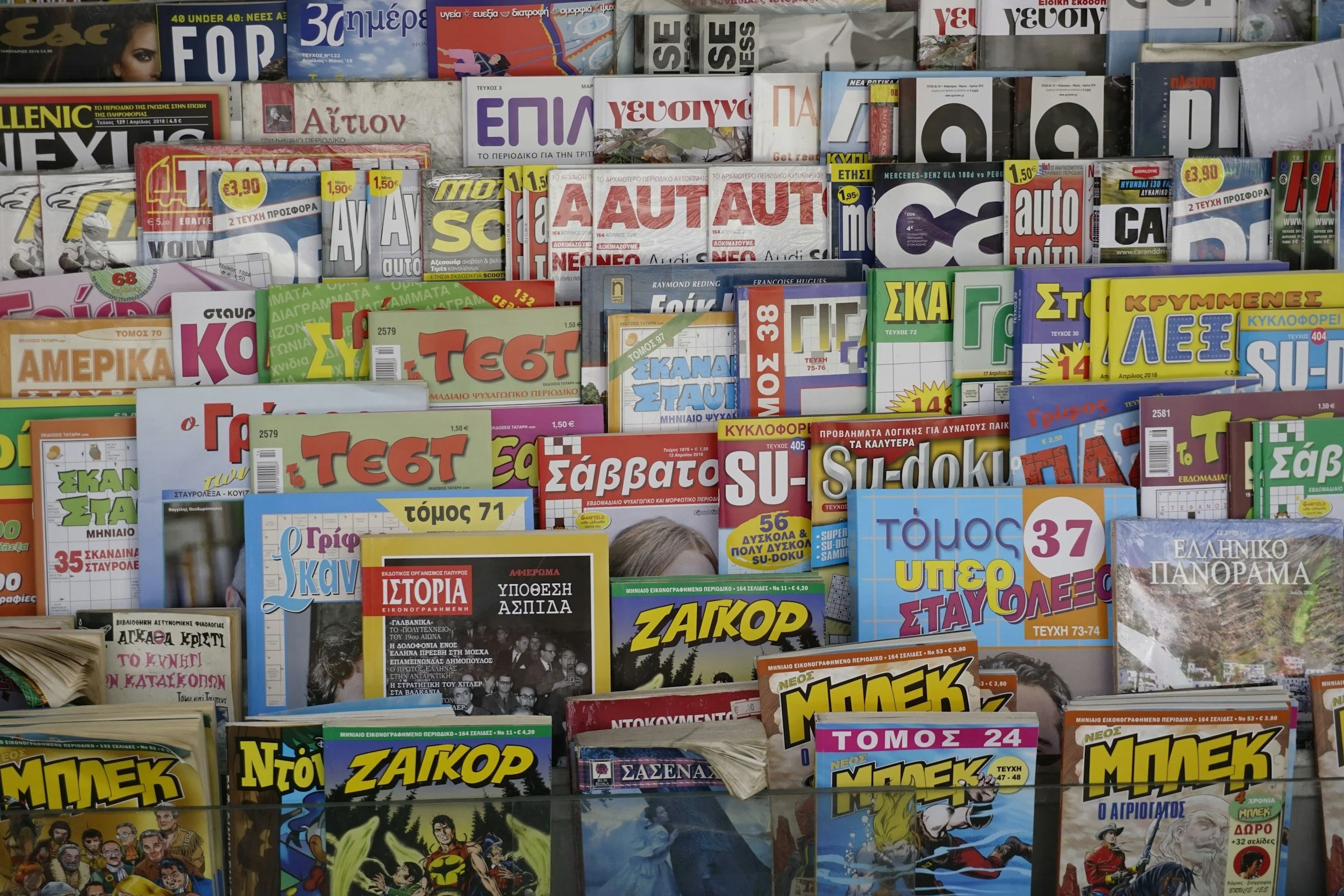
Viz, for the uninitiated, was the kind of magazine you pretended you didn’t read — and hid under your bed just in case your Mum did the hoovering. It wasn’t quite top-shelf, but it definitely lived on the higher end of the newsagent rack, sandwiched somewhere between Shoot! and embarrassment.
Every page was chaos — foul-mouthed cartoons, filthy punchlines, and parodies of Britain so ridiculous they somehow told the truth. For lads my age, Viz wasn’t just funny; it was GCSE-level training in bad language and bluffing your way through jokes you didn’t get.
If The Beano was your childhood, Viz was your adolescence — the awkward, hormonal bit where you discovered that humour could be rude, ridiculous, and unapologetically British.
My first and last purchase of Viz came the hard way. I was loitering outside a paper shop in town with a few of my mates — the one that somehow never blew away despite its name. (I thank you.) You couldn’t buy it locally; Mr Blackmore would’ve grassed you up to your Mum the moment you left the counter. So, whenever we went to Bristol, a couple of us would dare each other to try and buy a copy.
On this occasion it was my turn. The shop felt enormous — a cathedral of crisps, comics, and adolescent temptation. And there it was: Viz, glowing from the rack like contraband treasure. I loitered by the shelves, pretending to flick through Shoot! and Match, heartbeat thudding in my ears. Then I lunged — a stealthy grab for glory, or at least for Viz.
Unfortunately, Viz sat perilously close to the… specialist titles. As I reached for it, my sleeve caught the edge of the rack — and the rack refused to let go. I pulled once, twice, and on the third attempt gravity stepped in: a glossy avalanche of adult magazines came tumbling to the floor, taking my innocence with it.
Before I could react, two apparent experts of the gentleman’s-magazine world appeared at my side. One stepped out from behind the till; the other quietly abandoned the Football Crazies and Curly Wurly he’d been about to pay for. The customer man wore a bobbly beige cardigan, a comb-over holding on for dear life, and enough Brut 33 to trigger a smoke alarm.
He nodded at me while the till man, in a hushed voice, whispered, ‘Don’t worry, lad — happens more than you’d think, doesn’t it, Wayne?’
Then he and his accidental colleague started restacking Reader’s Wives Monthly and Rusty Handcuffs Quarterly with the solemnity of restoring the Sistine Chapel.
Wayne leaned in, smelling like an 80s changing room, and whispered, ‘Careful, son, these are in alphabetical order,’ as though I’d just disturbed the national archives………….
Like what you’ve read so far?